
Operations • 29 May 2026 • 8 min read
GSM, Width And MOQ: Fabric Specs Every B2B Buyer Should Confirm
A buyer-friendly guide to the specs that decide fabric cost, garment consumption, production planning and supplier response quality.
GSM Is Not The Whole Fabric
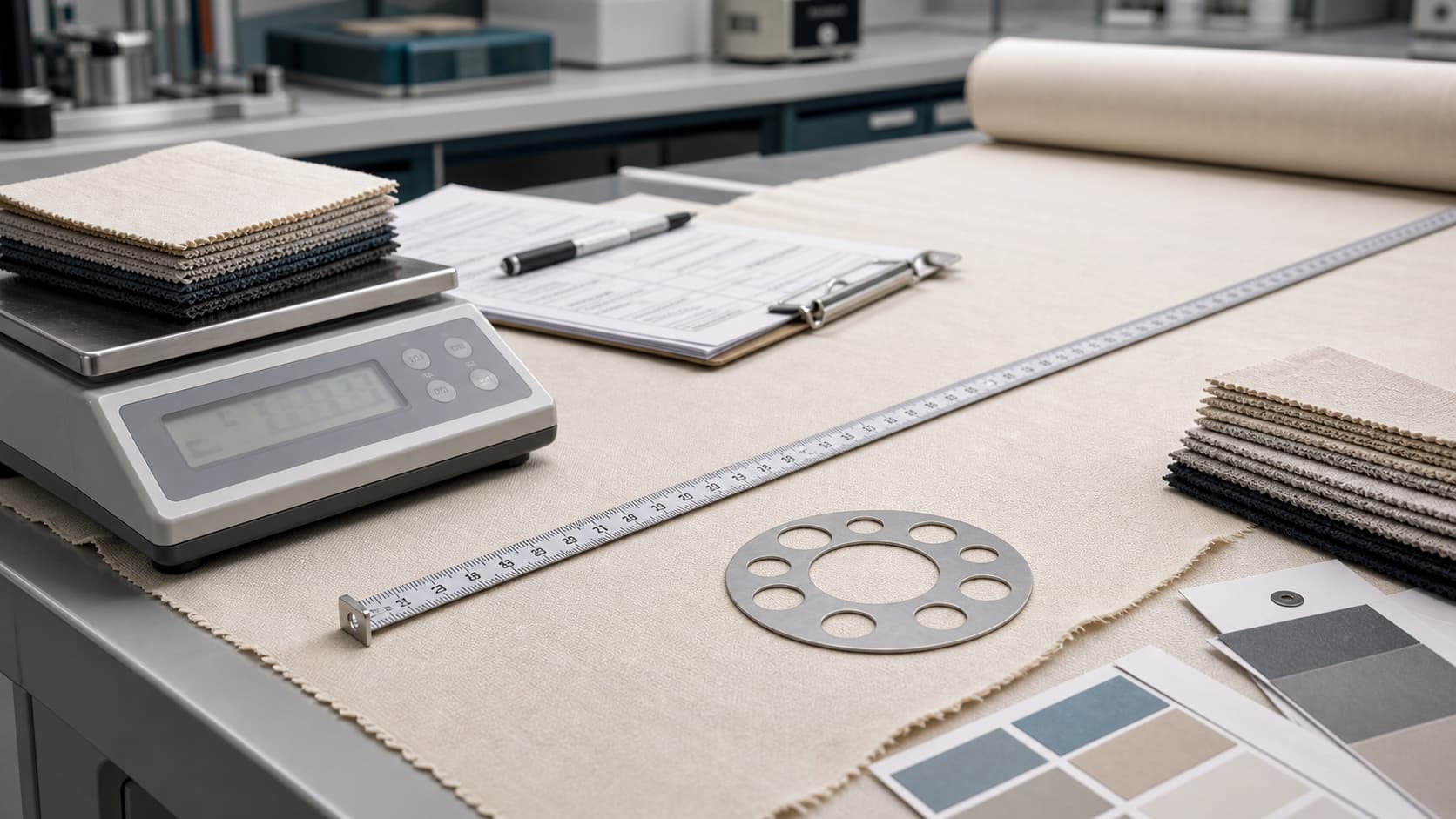
GSM tells you fabric weight per square meter. It does not fully explain drape, opacity, strength or surface feel.
Two fabrics can share GSM and behave differently because yarn, construction and finish are different.
Width Changes Commercial Outcome
Width affects fabric consumption, marker efficiency, dyeing route and sometimes production efficiency. A 44 inch fabric and a 63 inch fabric may create different garment costs even at the same meter price.
Buyers should confirm panno before quote approval so the manufacturer can plan correctly.
- GSM and handfeel
- Width and marker use
- Panno and processing route
- MOQ and sample path
MOQ Protects Production Reality
MOQ reflects weaving setup, yarn arrangement, processing viability and dispatch economics.
A buyer should ask whether sample, trial or direct bulk is the right path based on the fabric and quantity.
// Buyer FAQ
Common Questions
Can two fabrics with the same GSM feel different?
Yes. Yarn, construction, weave and finish can make fabrics with the same GSM behave differently.
Why does fabric width matter?
Width affects garment consumption, marker efficiency, processing route and the final commercial result.
// Next Buying Step
Turn This Into A Fabric Inquiry
Use the guide above to shortlist fabric type, width, GSM, finish stage, quantity, country, and sample requirement before contacting AERA TEX.